
Upcoming Events
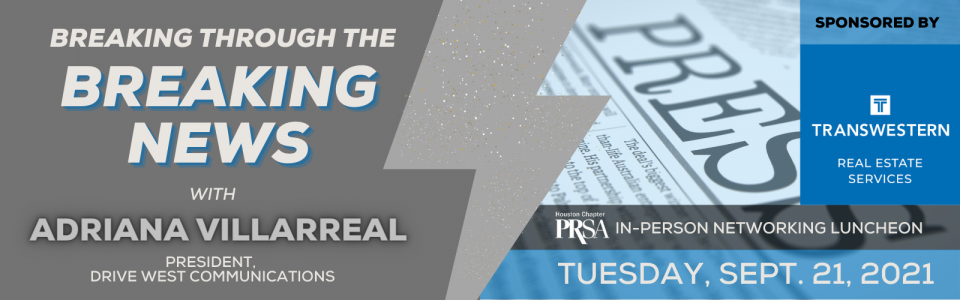
Breaking Through the Breaking News Cycle
September 21, 2021
11:30 AM - 1:00 PM
Add to Calendar
Transwestern
1900 West Loop South, 3rd Floor Conference Room
Houston, TX 77027
Directions
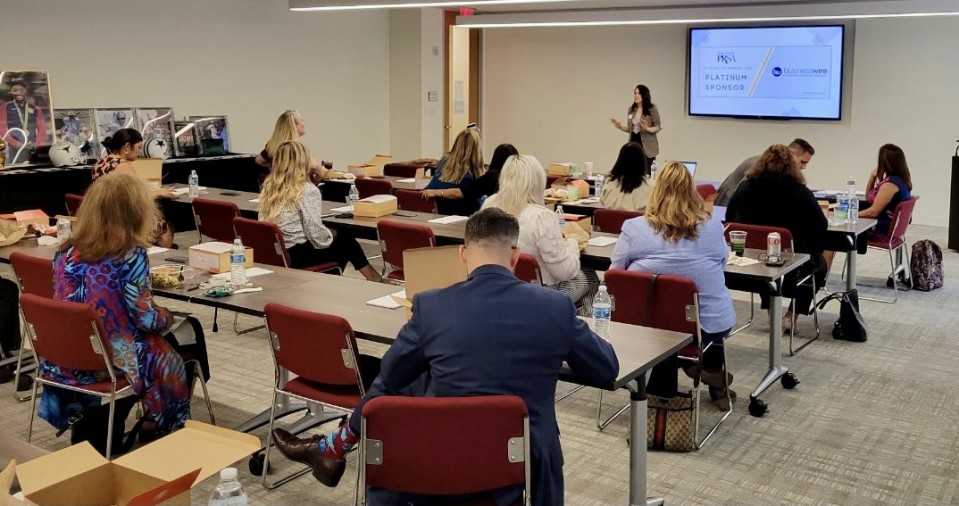
HOW TO BREAK through the breaking news cycle
We’ve all been there as PR pros. You have a great story to tell, but you can’t seem to get your message told through media when there’s so much darn breaking news!
COVID-19, hurricanes, crime… it all puts your story in the backseat. So how do you get through to let the media know just how amazing your story idea really is?
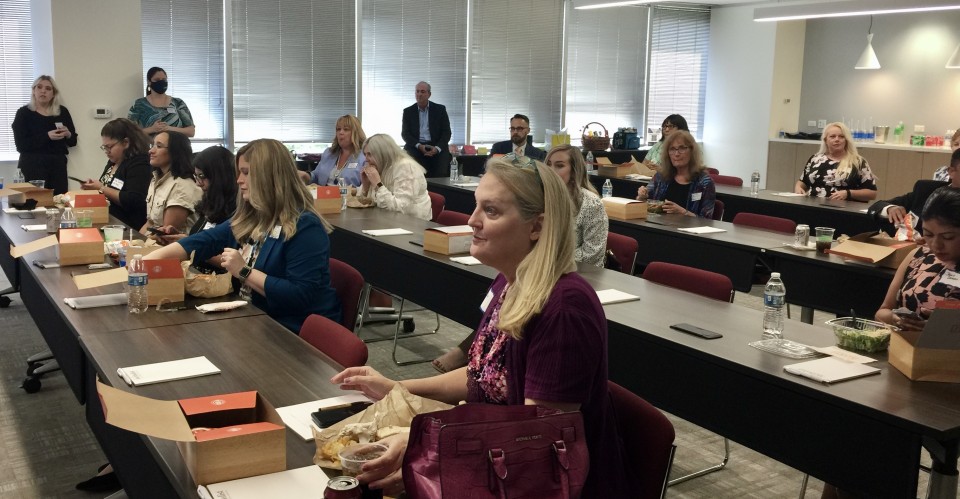
On Tuesday, September 21, Adriana Villarreal, founder of Drive West Communications, provided some tips on how to do just that. And yes – it CAN be done! Here are some of the big takeaways from her talk:
CREATE AN ACTION PLAN
First thing’s first in your strategy: Plot a communications action plan with compelling messages that align to the organization’s goals. Put your reporter’s hat on and find those interesting human elements that will help tell your story.
Your action plan should include the following:
- Regular check-ins with managers
- Create a calendar/pipeline of creative PR opportunities and issues to keep an eye on
- Identify and train spokespersons with diverse voices
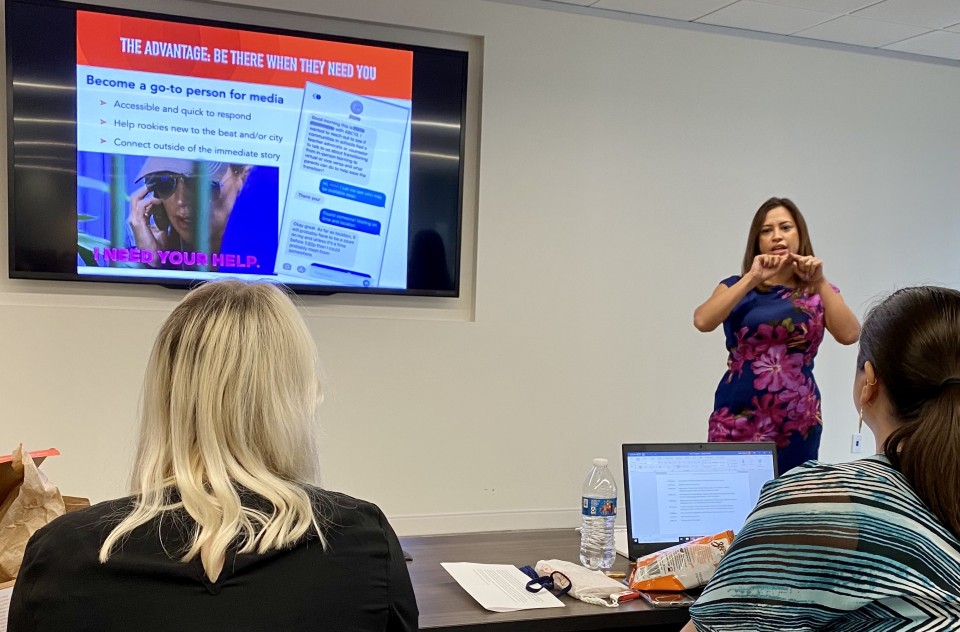
GAIN THE ADVANTAGE
Don’t send boring news releases or social media posts. Ever. Play to win EVERY time!
What’s the point of issuing a news release if you don’t think it’s newsworthy enough to get a media hit? Each time you go to a reporter, make it worth their time and have a COMPELLING STORY IDEA. What if it’s not? Dig deeper internally for interesting milestones, statistics, etc., and brainstorm to make a story idea newsworthy.
Other ways to gain the advantage:
- Become a go-to person for media. Be there when they need you—not hours or days later when other meetings and assignments have been cleared.
- Help rookies who are new to the beat or the city. Be a source they can rely on.
- Connect outside of the immediate story, and be honest and real. Reporters want to work with folks who they know and trust.
- Have an interesting and articulate – but not stuffy – spokesperson. Fluent Spanish speakers are critical in our market.
- Offer the complete package: Strong writing, b-roll video, interviews and testimonial. Reporters have more demands than ever and appreciate working with someone who understands what they need.
- Be a reporter in your organization. Conduct your own internal interviews and have a personal story of someone ready for media. Include an element of humanity in your pitch.
- Check out other industries and inspiring brands for story ideas.
- Invite reporters for ‘sneak peaks’ when available.
- Always be creative and think visuals first.
- Create sidebar opportunities during major news stories. What is your organization doing to help?
- Follow and engage with reporters – and who they follow – on social media. This includes associations, conferences, colleagues, HARO, other media markets and hashtags (like #HouNews).
- Continue learning with podcasts and journalism opportunities.
USE SOCIAL MEDIA TO DRIVE YOUR MESSAGE
Keep up-to-date with trending news and formats of social media, and use social media to drive your coverage.
- Cater your posts to each platform.
- Remember: Quality over quantity.
- Each post should be shareable by people OUTSIDE your organization.
- Be social. Don’t just spit out the information but closely monitor and engage with other relevant partners and media in their posts.
- Provide consistent messaging with diverse voices.
- Use simple, conversational language instead of industry terms or acronyms unfamiliar to the general public.
- Don’t be clever or cute, especially when it comes to issues regarding people’s health and safety.
WHEN CRISIS STRIKES: GET YOUR MESSAGING RIGHT
Be prepared before the crisis by having a communications plan in place with various planned scenarios. Communicate internally first when possible, and add context to the situation for media. Think about what the reporter would need or want – and GO GET IT! Provide data or specific statistics, release a bold, empathetic statement as soon as possible with a call to action. Put yourself in the shoes of the public, and speak to them like you would want to be spoken to.
WHEN ALL ELSE FAILS… DON’T GIVE UP!
Rework your messaging strategy and try again. Here are some ways to keep your message on point:
- Rework the pitch or email subject line
- Build in several plans into your pitching strategy
- Look for new angles, timing and visuals
- Target alternative reporters, editors or producers
FINAL THOUGHTS
Above all, think more like a reporter. Foster true relationships, engage with reporters - on and off social media. Take calculated risks, and evaluate your messaging plans daily.
When all else fails… try, try, try, try… and try again. Don’t be afraid to shift gears to get your message heard!
Good luck, PRSA Houston! And happy pitching!

Adriana Villarreal leads a nationally recognized public relations team dedicated to promoting education, energy, technology, healthcare and other advances helping millions of people in the Greater Houston area and across the country. Adriana counsels Fortune 100, government and nonprofit organizations on compelling communications strategies that drive clients’ important information to the public.
A broadcast journalism graduate from The University of Texas at Austin and trained radio and TV reporter, Adriana worked as a communications officer and spokesperson for the Houston Independent School District before founding Drive West Communications. Previously, she worked at the Office of the Governor of Texas under George W. Bush and for global public relations firm GCI Group (now BCW).
Tickets
$45.00 Members
$55.00 Guests
$25.00 Student Ticket


